
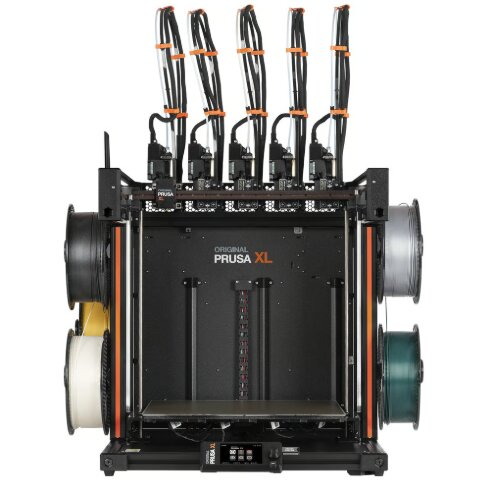
Printing in multiple colors or combining different materials used to require expensive industrial machines. Today, several consumer-friendly 3D printers make multi-material printing accessible to hobbyists, makers, educators, and small businesses.
Whether you’re printing colorful figurines, functional engineering parts with dissolvable supports, or professional prototypes, choosing the right 3D printer with multiple extruders—or an equivalent multi-material feeding system—can dramatically expand what you can create.
After comparing print quality, multi-color capabilities, printing speed, ease of use, calibration, software, reliability, and overall value, three models stood above the rest.
Our Top Recommendation: Bambu Lab P1S Combo
Why We Recommend It
The Bambu Lab P1S Combo offers one of the best multi-material printing experiences available without venturing into professional-level pricing.
Its Automatic Material System (AMS) allows effortless multi-color and multi-material printing, supporting up to 16 colors when additional AMS units are connected. Combined with its enclosed CoreXY design, automatic bed leveling, exceptional print quality, and blazing-fast print speeds, it delivers an outstanding balance of performance, reliability, and ease of use.
Unlike many multi-extruder systems that require frequent tuning and maintenance, the P1S Combo automates much of the printing process, making advanced printing accessible even to beginners.
If you’re looking for the best overall 3D printer with multiple extruders or multi-material capability, this is the machine we recommend first.
Best 3D Printers with Multiple Extruders: Our Top Picks
1. Bambu Lab P1S Combo – Best Overall 3D Printer with Multiple Extruders
Pros
✓ Supports up to 16 colors with additional AMS units
✓ Extremely fast CoreXY printing
✓ Fully enclosed design
✓ Excellent print quality
✓ Automatic bed leveling
✓ Beginner-friendly setup
✓ Broad filament compatibility
Cons
✕ AMS sold as part of Combo package
✕ Produces more filament waste during color changes than single-color printing
Specifications
| Feature | Specification |
|---|---|
| Multi-Material System | Automatic Material System (AMS) |
| Maximum Colors | Up to 16 |
| Printing Speed | Up to 500 mm/s |
| Acceleration | 20,000 mm/s² |
| Auto Bed Leveling | Yes |
| Enclosed Design | Yes |
| Motion System | CoreXY |
| Recommended Materials | PLA, PETG, TPU, PVA, ABS, ASA, PA, PC |
If versatility is your top priority, it’s difficult to find a more complete package than the Bambu Lab P1S Combo.
While technically it doesn’t use two independent print heads, its Automatic Material System functions similarly by feeding multiple filaments into a single nozzle automatically. For most users, this provides nearly all the benefits of a traditional multiple-extruder printer while eliminating many of the headaches associated with nozzle alignment and calibration.
The biggest advantage is its ability to produce vibrant multi-color prints with minimal user intervention. Whether you’re printing decorative models, educational projects, cosplay accessories, or prototypes, switching between colors happens automatically throughout the print.
The printing speed is equally impressive.
With speeds reaching 500 mm/s and acceleration up to 20,000 mm/s², the P1S dramatically reduces print times compared to many traditional consumer printers. Fast printing would mean little if quality suffered, but the CoreXY motion system keeps prints remarkably clean even at higher speeds.
Another major benefit is the fully enclosed frame.
Many open-frame printers struggle when printing engineering materials such as ABS or ASA because fluctuating temperatures can lead to warping or layer separation. The enclosed chamber helps maintain consistent temperatures, significantly improving print reliability with advanced materials.
Automatic bed leveling further simplifies the experience. Instead of manually adjusting the build plate before each print, the printer performs calibration automatically, reducing failed first layers and making setup much easier.
Material compatibility is another strength.
The printer handles common filaments such as PLA and PETG exceptionally well while also supporting TPU, PVA, ABS, ASA, nylon, and polycarbonate for users interested in more demanding applications.
Although color changes generate some additional filament waste, this is a common characteristic of single-nozzle multi-material systems and is generally outweighed by the convenience they provide.
For creators who want professional-looking multi-color prints without constant maintenance, the Bambu Lab P1S Combo sets an exceptionally high standard.
2. FLASHFORGE AD5X – Best Value Multi-Material 3D Printer
Pros
✓ Four-color printing
✓ Intelligent Filament System (IFS)
✓ Extremely fast printing speeds
✓ Full-auto calibration
✓ CoreXY motion system
✓ Compact footprint
✓ Excellent value
Cons
✕ Limited to four simultaneously loaded filaments
✕ Smaller ecosystem than some competitors
Specifications
| Feature | Specification |
|---|---|
| Multi-Material System | Intelligent Filament System (IFS) |
| Maximum Colors | 4 |
| Printing Speed | Up to 600 mm/s |
| Acceleration | 20,000 mm/s² |
| Auto Leveling | Yes |
| Motion System | CoreXY |
| Supported Materials | PLA, PETG, TPU, PLA-CF, PETG-CF, Silk PLA |
For buyers looking for excellent performance without stretching their budget too far, the FLASHFORGE AD5X is an extremely compelling option.
Its Intelligent Filament System allows automatic switching between four loaded filaments, making colorful prints surprisingly easy.
This opens up creative possibilities ranging from artistic figurines to functional parts that combine flexible and rigid materials within the same project.
Performance is another standout feature.
With maximum speeds reaching 600 mm/s, the AD5X ranks among the fastest consumer printers currently available. Combined with its CoreXY motion platform, rapid movement remains impressively stable, helping preserve detail even during high-speed operation.
One area where FLASHFORGE deserves particular credit is automation.
The printer performs automatic bed leveling before printing, ensuring consistent first-layer adhesion without requiring manual adjustment. This dramatically reduces failed prints, especially for users who are newer to 3D printing.
The Intelligent Filament System also contributes to a smoother experience.
Instead of pausing to manually swap spools during a print, the system manages material changes automatically, allowing complex multi-color projects to finish unattended.
Another feature worth mentioning is vibration compensation.
At high print speeds, vibration can introduce visible artifacts into finished parts. The AD5X actively compensates for these vibrations, helping maintain dimensional accuracy and cleaner surface finishes.
Despite offering multi-material functionality, the printer maintains a relatively compact footprint. The side-mounted filament arrangement helps conserve valuable desk space, making it suitable for home workshops, classrooms, and offices where space is limited.
Material support is broad enough for most users.
Besides standard PLA and PETG, the printer also supports TPU, Silk PLA, PLA-CF, and PETG-CF, making it capable of producing everything from flexible parts to stronger carbon-fiber-reinforced components.
Although it doesn’t currently match the color expansion offered by larger AMS systems, four simultaneous colors will satisfy the vast majority of hobbyists and makers.
3. Bambu Lab A1 Combo – Best Multi-Color Printer for Beginners
Pros
✓ Extremely easy to use
✓ AMS Lite enables automatic multi-color printing
✓ Quiet operation
✓ Full-auto calibration
✓ Active flow rate compensation
✓ Excellent print quality
✓ Includes LED lamp project kit
Cons
✕ Open-frame design isn’t ideal for some engineering materials
✕ Lower acceleration than flagship CoreXY models
Specifications
| Feature | Specification |
|---|---|
| Multi-Material System | AMS Lite |
| Maximum Colors | Multi-color printing |
| Acceleration | 10,000 mm/s² |
| Auto Calibration | Fully automatic |
| Flow Compensation | Active |
| Noise Level | ≤48 dB |
| Nozzle System | Quick Swap |
| Interface | Touchscreen |
Not everyone needs a professional-grade enclosed printer.
For beginners entering the world of multi-color printing, the Bambu Lab A1 Combo offers one of the smoothest learning experiences available.
Nearly every aspect of the printer has been designed to minimize setup and maintenance.
Instead of spending hours adjusting Z-offsets, leveling the bed, or tuning extrusion settings, users can simply begin printing after the automated calibration process completes.
The AMS Lite system provides automatic filament switching for multi-color prints.
Although technically different from traditional independent dual extruders, the end result is similar for most consumer applications: colorful prints produced automatically without manual filament swaps.
One feature that particularly stands out is Active Flow Rate Compensation.
During printing, the system continuously adjusts extrusion based on sensor feedback, helping produce smoother walls, cleaner overhangs, and more consistent surface quality.
The A1 is also noticeably quieter than many competing printers.
Active motor noise cancellation keeps operating noise below approximately 48 dB, making it a much better choice for apartments, offices, or shared workspaces where loud stepper motors could become distracting.
Maintenance is equally straightforward.
The quick-swap nozzle design allows users to replace nozzles within minutes, making it easy to switch between different nozzle sizes or replace worn components.
An interesting addition included with this Combo package is the LED Lamp Kit.
Rather than simply printing decorative objects, users can create fully functional illuminated lamp designs by integrating the included lighting components into compatible prints. It’s a thoughtful addition that encourages experimentation beyond traditional models.
Because of its open-frame construction, the A1 is best suited for common materials such as PLA and PETG rather than demanding engineering filaments that benefit from an enclosed chamber.
Nevertheless, for beginners primarily interested in colorful models, educational projects, household organizers, toys, cosplay accessories, and gifts, the A1 Combo delivers exceptional value.
Bottom Line: If you’re purchasing your first multi-color 3D printer and want the easiest possible experience, the Bambu Lab A1 Combo is an outstanding choice.
Product Comparison Table
| Printer | Multi-Material System | Maximum Colors | Auto Leveling | Enclosed | Best For |
|---|---|---|---|---|---|
| Bambu Lab P1S Combo | AMS | Up to 16 | Yes | Yes | Best Overall |
| FLASHFORGE AD5X | Intelligent Filament System | 4 | Yes | No | Best Value |
| Bambu Lab A1 Combo | AMS Lite | Multi-color | Yes | No | Beginners |
Multiple Extruders vs AMS and Intelligent Filament Systems
Many buyers assume they specifically need dual extruders, but that isn’t always the case.
Understanding the difference can help you choose the right printer.
Traditional Dual Extruders
A true dual-extruder printer has two separate extruders and often two separate nozzles.
Advantages include:
- Two materials available instantly
- Less filament purging
- Faster material switching
- Ideal for soluble supports
Potential drawbacks include:
- More difficult calibration
- Greater maintenance
- Higher chance of nozzle alignment issues
- Increased mechanical complexity
Automatic Material Systems (AMS)
Systems such as the Bambu Lab AMS automatically feed different filaments into a single nozzle.
Advantages include:
- Easier setup
- Less maintenance
- Better reliability
- Simpler calibration
- Excellent multi-color capability
Tradeoffs include:
- Additional purge waste during color changes
- Slightly longer print times on highly colorful models
For many home users, the benefits outweigh the drawbacks.
Intelligent Filament Systems (IFS)
FLASHFORGE’s Intelligent Filament System follows a similar philosophy by automatically managing multiple filament spools.
It delivers many of the conveniences of traditional dual extruders while keeping the printer compact and user-friendly.
What to Look for in a 3D Printer with Multiple Extruders
Not every multi-material printer offers the same experience.
Here are the most important factors to evaluate before buying.
Multi-Color Capacity
Consider how many colors you realistically expect to print.
The Bambu Lab P1S Combo stands out by supporting up to sixteen colors with additional AMS units, making it ideal for users producing highly detailed artistic models.
If four colors meet your needs, the FLASHFORGE AD5X provides an excellent balance between capability and affordability.
Printing Speed
High-speed printing has improved dramatically over the last few years.
All three printers featured in this guide print significantly faster than older consumer machines, helping reduce project times without sacrificing quality.
If maximum productivity is important, printers built around CoreXY motion systems generally deliver the fastest results.
Automatic Calibration
Manual bed leveling remains one of the most frustrating aspects of older printers.
Automatic calibration systems eliminate much of this work by measuring the build surface before each print and adjusting automatically.
All three recommended printers include automatic calibration, making them considerably easier to use than many previous-generation machines.
Material Compatibility
Think beyond PLA.
As your experience grows, you may want to experiment with:
- PETG
- TPU
- ABS
- ASA
- Nylon
- Polycarbonate
- Carbon-fiber composites
The wider the material compatibility, the longer your printer will remain useful as your skills develop.
Enclosed vs Open Frame
An enclosed printer provides better temperature control for engineering materials.
The enclosed Bambu Lab P1S Combo is the strongest option if you expect to print ABS, ASA, nylon, or polycarbonate regularly.
Open-frame printers such as the A1 Combo are generally ideal for PLA and PETG while offering easier access and lower overall cost.
Frequently Asked Questions
What is the best 3D printer with multiple extruders?
The Bambu Lab P1S Combo is our top recommendation. Its AMS system, enclosed CoreXY design, automatic calibration, high print quality, and support for up to sixteen colors make it one of the most capable consumer printers currently available.
Are multiple extruders better than a single extruder?
For multi-color and multi-material printing, yes. Multiple extruders—or automated filament systems—allow you to create more complex models without manually changing filament during the print.
Can you print multiple colors with one nozzle?
Yes. Systems such as Bambu Lab AMS and FLASHFORGE IFS automatically feed different filaments into a single nozzle, enabling multi-color printing without multiple physical print heads.
What is the difference between dual extruders and AMS?
Dual extruders use two separate print mechanisms, while AMS systems automatically switch between multiple filaments feeding a single nozzle. AMS systems are generally easier to maintain and calibrate.
Is an enclosed printer better?
If you regularly print engineering materials such as ABS, ASA, nylon, or polycarbonate, an enclosed printer provides better temperature stability and more reliable results.
Is the Bambu Lab P1S worth the extra cost?
For users who print frequently or want long-term versatility, the P1S Combo offers an excellent combination of speed, reliability, material compatibility, and multi-color capability that justifies its higher price.
Which printer is best for beginners?
The Bambu Lab A1 Combo is our favorite beginner-friendly option thanks to its automatic calibration, quiet operation, intuitive interface, and reliable AMS Lite system.
Is multi-material printing difficult?
Modern printers have made it much easier. Automatic calibration and filament management systems allow even new users to produce complex multi-color prints with minimal setup.
Can I print flexible and rigid materials together?
Yes, provided the printer supports both materials and the combination is compatible with the chosen print settings. Multi-material systems make this process much simpler than manual filament changes.
Do multi-color prints take longer?
Generally, yes. Each filament change adds a small amount of time to the print. Models with frequent color changes may also generate additional purge material.
Are automatic filament systems reliable?
The latest systems from manufacturers like Bambu Lab and FLASHFORGE have proven to be highly reliable when used with compatible filaments and properly maintained equipment.
Are these printers good for small businesses?
Absolutely. Their speed, automation, and consistent print quality make them excellent choices for Etsy shops, prototype production, educational institutions, and small manufacturing businesses.
Final Verdict
Choosing the best 3D printer with multiple extruders ultimately comes down to balancing print quality, ease of use, multi-material capabilities, and long-term versatility.
After comparing the leading options, the Bambu Lab P1S Combo earns our top recommendation. Its Automatic Material System, enclosed CoreXY architecture, support for up to sixteen colors, exceptional print quality, and fast printing speeds make it one of the most complete consumer 3D printing solutions currently available. Whether you’re creating colorful display models, engineering prototypes, or functional household parts, it consistently delivers professional-looking results with minimal effort.
The FLASHFORGE AD5X is an excellent alternative for buyers seeking outstanding value. Its Intelligent Filament System, four-color capability, impressive print speeds, and automatic calibration provide an excellent balance of performance and affordability for hobbyists, makers, and educators.
For newcomers to 3D printing, the Bambu Lab A1 Combo offers one of the easiest introductions to multi-color printing. Automatic calibration, quiet operation, Active Flow Rate Compensation, and the AMS Lite system remove much of the learning curve, allowing beginners to focus on designing and printing instead of troubleshooting.
Ultimately, today’s automated multi-material systems have made advanced 3D printing far more accessible than traditional dual-extruder machines. Whether you’re printing artistic models, functional prototypes, or products for sale, investing in a reliable multi-material printer can dramatically expand what you’re able to create.
Our Final Rankings
- Bambu Lab P1S Combo – Best Overall 3D Printer with Multiple Extruders
- FLASHFORGE AD5X – Best Value Multi-Material 3D Printer
- Bambu Lab A1 Combo – Best Multi-Color 3D Printer for Beginners