
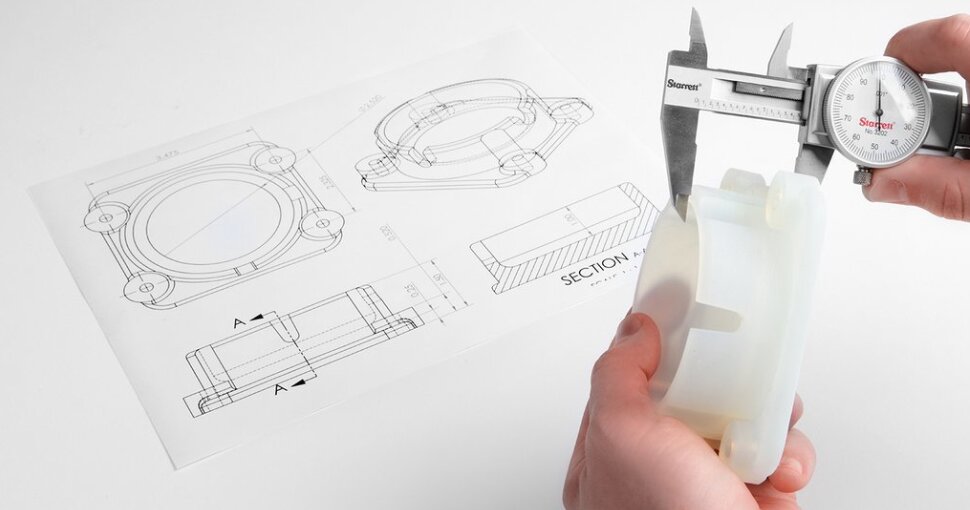
3D printers have become incredibly popular among hobbyists, engineers, designers, and businesses because they can turn digital models into real-world objects with impressive detail. However, one of the most common questions beginners ask before buying a 3D printer is: how accurate are 3D printers?
The short answer is that modern 3D printers can be extremely accurate, but accuracy depends on several factors, including the type of printer, material used, calibration, print settings, and the complexity of the design.
A high-quality desktop 3D printer can often achieve dimensional accuracy within 0.1mm to 0.3mm, which is enough for most hobby projects, prototypes, functional parts, and detailed models. Professional industrial machines can achieve even tighter tolerances.
Understanding what affects 3D printer accuracy can help you choose the right machine and improve your print results.
What Does 3D Printer Accuracy Mean?
3D printer accuracy refers to how closely a printed object matches the dimensions and details of the original digital model.
For example, if a CAD design specifies that a hole should measure 10mm wide, a highly accurate 3D printer should produce a hole that is very close to 10mm.
There are several different measurements used when discussing 3D printing accuracy:
Dimensional Accuracy
Dimensional accuracy measures how close the final printed object’s measurements are compared to the original design.
For example:
- Designed length: 50mm
- Printed length: 49.9mm
- Difference: 0.1mm
A smaller difference means better accuracy.
Dimensional accuracy is especially important for:
- Mechanical parts
- Replacement components
- Engineering prototypes
- Assemblies with multiple parts
Resolution
Resolution refers to the smallest detail a 3D printer can reproduce.
It is often divided into two categories:
Layer height:
The thickness of each individual layer deposited during printing.
XY resolution:
The level of detail the printer can achieve horizontally across the print bed.
A printer with a smaller layer height can create smoother surfaces and capture finer details, but resolution does not always equal accuracy.
A printer may produce very detailed layers while still having dimensional inaccuracies due to calibration issues.
Repeatability
Repeatability refers to how consistently a 3D printer can produce the same result multiple times.
For example, if you print the same part five times, a highly repeatable printer should create nearly identical versions each time.
Repeatability is important for:
- Manufacturing small batches
- Creating replacement parts
- Producing multiple prototypes
How Accurate Are Different Types of 3D Printers?
The accuracy of a 3D printer depends heavily on the technology it uses.
1. FDM 3D Printer Accuracy
FDM (Fused Deposition Modeling) printers are the most common type of consumer 3D printer.
They work by melting plastic filament and depositing it layer by layer.
Typical accuracy:
- Dimensional accuracy: around ±0.1mm to ±0.5mm
- Layer height: 0.05mm to 0.3mm
Modern FDM printers from brands like Bambu Lab, Prusa, Creality, and others can produce surprisingly accurate parts when properly calibrated.
FDM printers are excellent for:
- Functional prototypes
- Mechanical parts
- Tools
- Household items
- Hobby projects
However, they may struggle with:
- Extremely small details
- Smooth surfaces
- Tiny text
- Complex miniature models
2. Resin 3D Printer Accuracy
Resin 3D printers use liquid resin cured by UV light to create objects.
Typical accuracy:
- Dimensional accuracy: around ±0.05mm to ±0.2mm
- Layer height: 0.01mm to 0.1mm
Resin printers are generally more accurate for fine details because they use light-based curing instead of a physical nozzle depositing material.
They are commonly used for:
- Miniatures
- Jewelry designs
- Dental models
- Highly detailed prototypes
The tradeoff is that resin printing requires more post-processing and careful handling.
3. Industrial 3D Printer Accuracy
Industrial 3D printers designed for aerospace, automotive, and manufacturing applications can achieve extremely tight tolerances.
Some industrial systems can achieve accuracy within:
- ±0.01mm to ±0.1mm
These machines often use advanced technologies such as:
- Selective laser sintering (SLS)
- Direct metal laser sintering (DMLS)
- Stereolithography (SLA)
However, they can cost thousands or even hundreds of thousands of dollars.
Factors That Affect 3D Printer Accuracy
Even an expensive 3D printer will produce inaccurate results if important variables are not controlled.
1. Printer Calibration
Calibration is one of the biggest factors affecting accuracy.
Important calibration steps include:
- Leveling the print bed
- Adjusting the nozzle height
- Calibrating extrusion flow
- Setting correct belt tension
- Calibrating the extruder steps
A poorly calibrated printer can create parts that are noticeably different from the original design.
For example, incorrect extrusion settings can cause:
- Oversized holes
- Bulging walls
- Incorrect dimensions
- Poor surface quality
2. Print Speed
Print speed affects how accurately a printer can move and deposit material.
Printing too quickly can cause:
- Layer shifting
- Vibrations
- Poor corners
- Inconsistent extrusion
Slower print speeds usually allow the printer to create more accurate parts.
Many users find that reducing speed slightly produces significantly better results.
3. Material Type
Different materials behave differently during printing.
Common materials include:
PLA
PLA is one of the easiest materials to print and usually provides good dimensional accuracy.
Advantages:
- Low warping
- Easy printing
- Good detail
PETG
PETG is stronger and more heat-resistant than PLA but can be slightly more difficult to print accurately.
ABS
ABS can produce strong parts but has a higher tendency to warp and shrink.
TPU
Flexible TPU requires careful settings because the material can compress during extrusion.
4. Temperature Settings
Incorrect temperatures can affect accuracy.
Too much heat may cause:
- Soft details
- Sagging
- Excess material
Too little heat may cause:
- Weak layer bonding
- Under-extrusion
- Failed prints
Finding the correct nozzle and bed temperatures helps maintain consistent dimensions.
5. Mechanical Quality of the Printer
The hardware itself plays a major role.
Important components include:
- Linear rails
- Belts
- Lead screws
- Frame rigidity
- Extruder quality
A printer with loose components or poor construction may struggle to maintain accuracy.
Higher-quality printers usually have:
- More rigid frames
- Better motion systems
- More precise components
- Improved calibration features
How Accurate Are Budget 3D Printers?
Affordable 3D printers can be surprisingly accurate today.
Entry-level printers costing a few hundred dollars can often produce parts accurate enough for:
- Cosplay props
- Toys
- Decorations
- Basic prototypes
- Household repairs
However, achieving maximum accuracy may require:
- Better calibration
- Upgraded components
- More testing
- Fine-tuning print settings
The printer itself is only part of the equation. User experience and settings often make a bigger difference than price alone.
How To Improve 3D Printer Accuracy
If your prints are not matching your designs, there are several ways to improve accuracy.
Calibrate Your Extruder
Incorrect extrusion amounts can make parts too large or too small.
Adjusting extrusion flow helps ensure the printer deposits the correct amount of material.
Use Calibration Prints
Calibration models help identify problems with:
- Dimensions
- Temperature
- Retraction
- Layer quality
Common calibration prints include:
- Calibration cubes
- Temperature towers
- Retraction tests
- Benchy boats
Adjust Your Slicer Settings
The slicer controls how your printer creates the object.
Important settings include:
- Layer height
- Wall thickness
- Infill percentage
- Print speed
- Cooling settings
- Retraction settings
Small adjustments can significantly improve results.
Design With Manufacturing Tolerances
3D printing is not the same as traditional manufacturing.
When designing parts that fit together, allow extra clearance.
For example:
- Moving parts may need additional spacing
- Snap-fit connections require testing
- Holes may need to be slightly oversized
Experienced designers account for these limitations when creating models.
Can a 3D Printer Make Exact Dimensions?
A 3D printer cannot produce perfectly exact dimensions every time.
Small variations occur because of:
- Material shrinkage
- Temperature changes
- Mechanical movement
- Layer adhesion
- Printer calibration
However, modern 3D printers are accurate enough for most consumer and hobby applications.
For applications requiring extremely precise measurements, printed parts may need:
- Post-processing
- Sanding
- Drilling
- Machining
- Additional finishing steps
Are 3D Printers Accurate Enough For Functional Parts?
Yes, many 3D printers can create functional parts.
Examples include:
- Brackets
- Enclosures
- Replacement knobs
- Tool holders
- Gears
- Mechanical components
For functional parts, accuracy depends on:
- Design tolerances
- Material choice
- Printer calibration
- Required strength
A well-tuned FDM printer can create surprisingly precise functional components.
How Accurate Are 3D Printed Miniatures?
For miniatures and highly detailed models, resin printers are usually the better choice.
Resin printers can capture:
- Facial details
- Fine textures
- Small features
- Intricate designs
FDM printers can print miniatures, but they typically show more visible layer lines and less fine detail.
Final Thoughts: How Accurate Are 3D Printers?
So, how accurate are 3D printers?
Modern 3D printers are much more accurate than many people expect. A well-calibrated consumer FDM printer can typically achieve around 0.1mm to 0.5mm accuracy, while resin printers can achieve even finer detail.
However, accuracy is not determined by the printer alone. Calibration, materials, print settings, and design choices all play important roles.
For most hobbyists, makers, and small businesses, today’s 3D printers are accurate enough to create detailed models, functional parts, prototypes, and everyday objects.
The key to getting accurate prints is not simply buying the most expensive machine—it is understanding how your printer works and learning how to optimize its settings.