
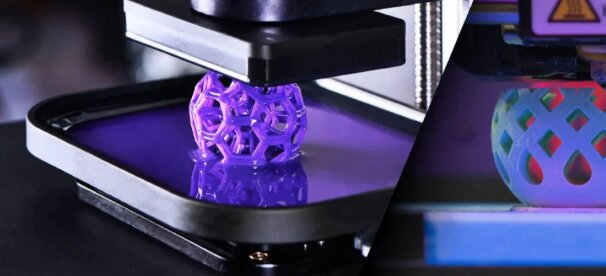
Resin printing is a type of 3D printing technology that uses liquid photopolymer resin and ultraviolet (UV) light to create highly detailed three-dimensional objects layer by layer. Unlike traditional filament-based 3D printers that melt plastic and extrude it through a nozzle, resin printers cure liquid resin into solid parts with exceptional precision and surface quality.
Because of its ability to produce intricate details, smooth surfaces, and complex geometries, resin printing has become increasingly popular among hobbyists, miniature painters, jewelry makers, engineers, dentists, and professionals who require highly accurate prints.
In this guide, you’ll learn exactly how resin printing works, its advantages and disadvantages, common applications, safety considerations, and whether it’s the right choice for your needs.
What Is Resin Printing?
Resin printing is an additive manufacturing process that creates objects by selectively hardening liquid resin using UV light.
The printer contains a vat filled with liquid resin. A UV light source shines through a masking screen or is directed by a laser to cure specific areas of the resin. Once a layer hardens, the build platform moves slightly, allowing the next layer to be formed on top of the previous one.
This process repeats hundreds or thousands of times until the entire object is completed.
The result is a highly detailed model with smooth surfaces and fine features that are difficult to achieve with many other 3D printing technologies.
How Does Resin Printing Work?
Although different resin printing technologies exist, most follow a similar workflow.
Step 1: Create or Download a 3D Model
The process begins with a digital 3D model, usually saved as an STL or 3MF file.
Many users create their own designs using CAD software, while others download models from online repositories.
Step 2: Slice the Model
The model is imported into slicing software.
The slicer converts the model into hundreds or thousands of layers and generates instructions that the printer can understand.
The software also allows users to adjust settings such as:
- Layer height
- Exposure time
- Support structures
- Lift speeds
- Print orientation
Step 3: Fill the Resin Vat
The printer’s resin tank is filled with liquid photopolymer resin.
Different resins are available depending on the desired properties, including standard, tough, flexible, engineering, dental, and castable resins.
Step 4: UV Light Cures Each Layer
The printer exposes selected portions of resin to UV light.
The exposed resin hardens while the unexposed resin remains liquid.
Each cured layer forms part of the final object.
Step 5: Build Platform Moves
After a layer is cured, the build platform moves to allow fresh resin to flow beneath the print.
The next layer is then cured.
This cycle continues until the print is complete.
Step 6: Washing and Post-Curing
Unlike filament printing, resin prints require post-processing.
Freshly printed parts are typically:
- Removed from the build plate
- Washed in isopropyl alcohol (IPA) or cleaning solution
- Allowed to dry
- Cured under UV light
Post-curing strengthens the model and ensures complete hardening.
Types of Resin Printing Technologies
Several resin printing technologies are available today.
SLA (Stereolithography)
SLA uses a UV laser that traces each layer onto the resin surface.
Benefits include:
- Excellent accuracy
- High detail
- Smooth surfaces
However, SLA printers are often more expensive and slower than other resin technologies.
DLP (Digital Light Processing)
DLP printers use a projector to cure an entire layer simultaneously.
Advantages include:
- Faster print times
- Good detail
- Efficient light usage
MSLA (Masked Stereolithography)
MSLA is currently the most common consumer resin printing technology.
It uses:
- UV LED light source
- LCD masking screen
The LCD blocks UV light where curing is not needed and allows it where curing should occur.
Benefits include:
- Affordable printers
- High resolution
- Fast print speeds
- Excellent detail
Most modern hobbyist resin printers use MSLA technology.
Resin Printing vs FDM Printing
Many beginners compare resin printers with filament-based FDM printers.
Resin Printing Advantages
- Exceptional detail
- Smooth surface finish
- Tiny feature reproduction
- Professional-looking miniatures
- Excellent dimensional accuracy
FDM Printing Advantages
- Lower operating costs
- Easier maintenance
- Larger build volumes
- Greater material variety
- Simpler workflow
Which Produces Better Quality?
For pure visual quality and detail, resin printing typically wins.
For large functional parts and everyday household projects, FDM often provides better value and convenience.
Advantages of Resin Printing
Incredible Detail
One of the biggest reasons people choose resin printing is its ability to capture extremely fine details.
Miniature figures, jewelry patterns, and dental models can display features that are difficult for many filament printers to reproduce.
Smooth Surface Finish
Resin prints often emerge with minimal visible layer lines.
This reduces sanding and finishing work.
High Precision
Modern resin printers can achieve very small layer heights and fine XY resolutions.
This makes them ideal for professional applications requiring accuracy.
Complex Geometry
Resin printing handles intricate designs exceptionally well, especially when supported correctly.
Excellent for Small Objects
Tiny models that would challenge many FDM printers are often easily produced with resin technology.
Disadvantages of Resin Printing
More Messy Workflow
Liquid resin can be messy to handle.
Proper cleaning procedures are required.
Additional Post-Processing
Washing and UV curing add extra steps after printing.
Safety Requirements
Users must take precautions when handling uncured resin.
Strong Odors
Some resins emit noticeable odors during printing.
Material Costs
Resin typically costs more per kilogram than common FDM filaments.
Smaller Build Volumes
Many consumer resin printers offer smaller print areas than similarly priced filament printers.
Common Applications for Resin Printing
Resin printing excels in industries where detail and precision matter.
Miniatures and Tabletop Gaming
Many hobbyists use resin printers to create:
- RPG miniatures
- Wargaming figures
- Terrain accessories
- Collectible statues
Jewelry Design
Jewelry makers often print highly detailed wax-like models used for casting precious metals.
Dentistry
Dental professionals use resin printing for:
- Surgical guides
- Crowns
- Aligner molds
- Dental models
Engineering Prototypes
Engineers create highly accurate prototypes and fit-testing components.
Model Making
Architectural and product designers frequently use resin printers to create presentation-quality models.
Types of Resin Used in 3D Printing
Not all resins are the same.
Standard Resin
Designed for general-purpose printing.
Offers excellent detail and smooth surfaces.
Tough Resin
Improved durability and impact resistance.
Useful for functional parts.
Flexible Resin
Creates parts that bend and flex without breaking.
High-Temperature Resin
Designed to withstand elevated temperatures.
Castable Resin
Used in jewelry and investment casting applications.
Dental Resin
Specialized formulations developed for medical and dental uses.
Is Resin Printing Safe?
Resin printing can be safe when proper precautions are followed.
Uncured resin should not come into direct contact with skin and should not be ingested.
Recommended safety practices include:
- Wearing nitrile gloves
- Using eye protection
- Working in a ventilated area
- Avoiding direct skin contact
- Following manufacturer instructions
- Properly disposing of waste materials
Once fully cured, most printed parts are significantly safer to handle than liquid resin.
Essential Equipment for Resin Printing
A complete resin printing setup often includes:
- Resin printer
- UV curing station
- Washing station
- Nitrile gloves
- Safety glasses
- Isopropyl alcohol
- Resin filters
- Silicone mats
- Paper towels
- UV-resistant storage containers
Having the proper tools makes the workflow cleaner and safer.
Is Resin Printing Good for Beginners?
Modern resin printers are far easier to use than early models.
Many entry-level machines feature:
- Automatic leveling systems
- User-friendly interfaces
- Improved reliability
- Better slicing software
However, beginners should understand that resin printing involves more preparation, cleanup, and safety considerations than typical FDM printing.
For users primarily interested in miniatures, figurines, jewelry, and highly detailed models, resin printing can be an excellent starting point.
How Much Does Resin Printing Cost?
The total cost depends on the printer, resin, and accessories.
Typical expenses include:
- Printer purchase
- Resin materials
- Washing supplies
- UV curing equipment
- Replacement screens and consumables
Although resin printers have become more affordable, ongoing material and maintenance costs are generally higher than basic filament printing setups.
Frequently Asked Questions
Is resin printing better than filament printing?
Neither technology is universally better. Resin printing excels at detail and surface quality, while filament printing is often better for larger functional parts and lower operating costs.
How long does resin printing take?
Print times vary depending on model height, layer count, and exposure settings. Small prints may finish in a few hours, while larger projects can take significantly longer.
Can resin prints be used outdoors?
Some resins degrade when exposed to sunlight for extended periods. Specialized engineering resins may offer better UV resistance.
Do resin prints need supports?
Most resin prints require support structures to prevent failures and improve print quality.
Why do resin prints need curing?
UV curing completes the polymerization process and helps achieve the intended strength and durability.
Final Thoughts
Resin printing is one of the most impressive forms of consumer 3D printing available today. By using UV light to cure liquid resin layer by layer, it produces exceptionally detailed parts with smooth surfaces and professional-looking results.
While the workflow requires additional cleaning, curing, and safety precautions compared to filament printing, the level of detail makes resin technology an excellent choice for miniatures, jewelry, dental applications, engineering prototypes, and other precision-focused projects.
For anyone who values detail above all else, resin printing remains one of the most capable and rewarding 3D printing technologies available.