
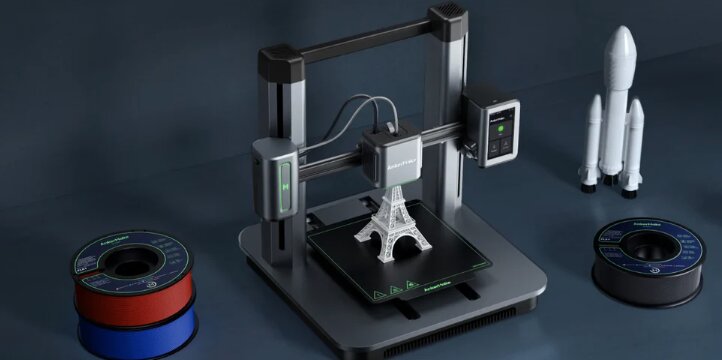
Miniature printing demands a different set of priorities than general-purpose 3D printing. While build volume and speed are important, the most critical factors are print quality, layer consistency, precision, reliability, and ease of calibration.
Whether you’re printing tabletop gaming figures, Dungeons & Dragons characters, Warhammer terrain, display models, collectible figurines, or custom sculptures, the right 3D printer can dramatically improve the quality of your results.
After comparing print precision, auto-leveling capabilities, multi-color functionality, software features, ease of use, print speed, AI-assisted monitoring, and overall value, one printer stood out as the best option for miniature enthusiasts.
Our Top Recommendation: Anycubic Kobra X
Why We Recommend It
The Anycubic Kobra X delivers an outstanding combination of precision, reliability, automation, and beginner-friendly operation.
Its LeviQ 3.0 automatic leveling system, AI-powered monitoring, vibration compensation, hardened steel nozzle, multi-color support, and 600mm/s high-speed printing create an excellent platform for producing detailed miniatures with minimal frustration.
Unlike many printers that require significant tuning before achieving acceptable results, the Kobra X focuses on simplicity and consistency. Whether you’re printing highly detailed figurines, tabletop terrain, cosplay accessories, or display models, it provides exceptional value for miniature enthusiasts.
Best 3D Printer for Miniatures: Our Top Picks
1. Anycubic Kobra X – Best Overall 3D Printer for Miniatures
Pros
✓ Outstanding print quality for miniature models
✓ LeviQ 3.0 automatic leveling system
✓ AI-powered print monitoring
✓ Multi-color printing support
✓ Beginner-friendly setup
✓ Large build volume
✓ Reliable first-layer performance
✓ Supports a wide range of materials
Cons
✕ Multi-color expansion requires additional hardware
✕ Larger footprint than some competitors
Specifications
| Feature | Specification |
|---|---|
| Build Volume | 260 × 260 × 260 mm |
| Maximum Speed | 600 mm/s |
| Auto Leveling | LeviQ 3.0 |
| Camera | 720P AI Camera |
| Multi-Color Printing | Up to 19 Colors |
| Nozzle Temperature | Up to 300°C |
| Materials | PLA, PETG, TPU, PVA, ASA |
| Noise Level | ≤48 dB |
If you’re searching for the best 3D printer for miniatures overall, the Anycubic Kobra X is the strongest option currently available.
Miniature printing requires precision, consistency, and repeatability. Even minor calibration issues can ruin facial details, armor textures, weapons, or terrain features. The Kobra X addresses these challenges through its LeviQ 3.0 leveling system and vibration compensation technology.
One of the biggest frustrations for miniature hobbyists is achieving a perfect first layer. Poor adhesion often leads to failed prints and wasted filament. The Kobra X’s 49-point fully automatic leveling system virtually eliminates this problem.
The printer’s AI monitoring system is another major advantage. Real-time spaghetti detection and error alerts help prevent failed miniature prints that can waste hours of printing time.
For creators interested in painting miniatures, the Kobra X delivers excellent surface consistency that requires less post-processing than many competing printers.
Its 600mm/s speed is impressive, but what matters more is its ability to maintain quality while printing. Fast printers are common today. Fast printers that preserve detail are far less common.
The generous build volume also allows users to print large terrain pieces, buildings, gaming accessories, and multiple miniatures simultaneously.
The ability to expand up to 19-color printing adds another layer of flexibility for hobbyists who want to create visually impressive models without extensive painting.
2. Bambu Lab A1 Combo – Best 3D Printer for High-Quality Miniatures
Pros
✓ Exceptional print precision
✓ Full-auto calibration
✓ AMS Lite multi-color support
✓ Active flow compensation
✓ Extremely beginner friendly
✓ Quiet operation
✓ Excellent software ecosystem
Cons
✕ Smaller build volume than some competitors
✕ Premium pricing compared to entry-level machines
Specifications
| Feature | Specification |
|---|---|
| Calibration | Fully Automatic |
| Multi-Color Printing | AMS Lite |
| Noise Level | ≤48 dB |
| Flow Compensation | Active |
| Nozzle System | Quick Swap |
| Acceleration | 10,000 mm/s² |
Bambu Lab has earned a strong reputation among hobbyists, and the A1 Combo demonstrates why.
For miniature printing, consistency often matters more than raw speed. The A1 excels in this area through its advanced calibration system and active flow compensation.
The printer automatically handles bed leveling, Z-offset adjustments, and calibration tasks that traditionally required manual intervention.
This makes the A1 particularly attractive for users who want excellent miniature quality without spending hours tweaking settings.
The active flow rate compensation system is one of the most useful technologies available in modern FDM printing. It continuously adjusts material flow to maintain smooth surfaces and sharper details.
Miniatures benefit tremendously from this capability because even minor extrusion inconsistencies can soften facial features, armor details, and decorative textures.
The AMS Lite system also enables reliable multi-color miniature projects.
Another area where the A1 shines is usability. The interface is intuitive, setup is straightforward, and maintenance requirements are minimal.
For hobbyists focused primarily on miniature quality rather than maximum build volume, the A1 Combo is one of the most refined printers available today.
3. Creality K1C – Best High-Speed 3D Printer for Miniatures
Pros
✓ Extremely fast CoreXY architecture
✓ AI camera monitoring
✓ Carbon fiber compatibility
✓ Fully enclosed design
✓ Auto calibration
✓ Excellent software support
Cons
✕ Learning curve for advanced settings
✕ Enclosed design increases overall size
Specifications
| Feature | Specification |
|---|---|
| Build Volume | 220 × 220 × 250 mm |
| Maximum Speed | 600 mm/s |
| Motion System | CoreXY |
| Camera | AI Monitoring Camera |
| Nozzle Temperature | 300°C |
| Carbon Fiber Support | Yes |
| Noise Level | ≤45 dB |
The Creality K1C is ideal for miniature enthusiasts who want both speed and precision.
Its CoreXY architecture provides significant advantages over traditional motion systems. Reduced moving mass allows the printer to maintain accuracy even at high speeds.
While miniature printing is often associated with slow print speeds, faster printers can significantly improve productivity when printing armies, terrain sets, or large batches of models.
The AI camera helps detect failures before they become expensive problems.
Another advantage is the fully enclosed chamber. Temperature stability improves print consistency and expands material compatibility.
The hardened steel nozzle and carbon fiber support make the K1C useful for hobbyists who occasionally print functional gaming accessories alongside miniatures.
Creality’s open-source ecosystem and growing software support also make the printer appealing for users who enjoy customization.
4. Creality SPARKX i7 – Best Smart 3D Printer for Miniatures
Pros
✓ AI-assisted modeling tools
✓ Automatic calibration
✓ Large build volume
✓ AI camera monitoring
✓ RGB lighting system
✓ Very quiet operation
✓ Excellent ease of use
Cons
✕ Newer platform with a smaller community
✕ Multi-color printing requires CFS accessory
Specifications
| Feature | Specification |
|---|---|
| Build Volume | 260 × 260 × 255 mm |
| Maximum Speed | 500 mm/s |
| Camera | AI Smart Camera |
| Auto Leveling | Yes |
| RGB Lighting | Yes |
| Noise Mode | Night Mode |
| Assembly | 95% Pre-Assembled |
The SPARKX i7 focuses heavily on automation and intelligent printing features.
For beginners entering miniature printing, this can significantly reduce the learning curve.
The printer handles leveling, nozzle offset adjustments, and calibration automatically.
Its AI camera actively monitors prints and helps identify common issues before they result in failed projects.
One unique feature is CubeMe AI integration, which allows users to transform portraits into printable 3D models.
For miniature creators interested in personalized figurines, custom character models, or gift projects, this functionality opens interesting creative possibilities.
The large build volume is another advantage. It allows users to print multiple miniatures simultaneously or tackle larger terrain projects.
The printer’s pressure advance and input shaping systems help produce smoother surfaces and sharper corners, both of which contribute to better-looking miniatures.
5. Anycubic Photon Mono M7 Pro (Resin Alternative) – Best Resin Printer for Ultra-Detailed Miniatures
Pros
✓ Exceptional miniature detail
✓ Superior surface quality
✓ Ideal for figurines and collectibles
✓ Excellent facial detail reproduction
✓ Minimal visible layer lines
Cons
✕ Resin handling requirements
✕ Additional post-processing needed
✕ Smaller build volume
Specifications
| Feature | Specification |
|---|---|
| Printing Type | Resin (MSLA) |
| Resolution | Ultra High Resolution |
| Detail Level | Exceptional |
| Best Use | Miniatures & Figurines |
While this guide primarily focuses on FDM printers, it would be impossible to discuss miniature printing without mentioning resin printers.
For pure detail, resin technology still remains the benchmark.
Miniature collectors, tabletop gamers, and figurine painters often prefer resin because it captures tiny details that can be difficult to reproduce using FDM technology.
Facial features, chainmail textures, weapon engravings, and decorative elements generally appear sharper on resin printers.
However, resin printing involves additional safety considerations, cleaning procedures, and post-processing requirements.
For users willing to manage those extra steps, a quality resin printer can produce some of the most impressive miniatures possible.
Product Comparison Table
| Printer | Build Volume | Auto Leveling | AI Camera | Multi-Color | Best For |
|---|---|---|---|---|---|
| Anycubic Kobra X | 260×260×260 mm | Yes | Yes | Up to 19 Colors | Overall Value |
| Bambu Lab A1 Combo | Medium | Full Auto | No | Yes | Print Quality |
| Creality K1C | 220×220×250 mm | Yes | Yes | No | High-Speed Printing |
| Creality SPARKX i7 | 260×260×255 mm | Yes | Yes | Optional | Smart Features |
| Anycubic Photon Mono M7 Pro | Smaller | N/A | No | No | Maximum Detail |
What Makes a Good 3D Printer for Miniatures?
Not all 3D printers are equally suited for miniature production.
Several factors have a direct impact on miniature quality.
Print Precision
Miniatures contain tiny details such as facial expressions, armor patterns, weapons, and decorative textures.
Higher precision allows these details to remain visible.
Reliable First Layers
Failed first layers can ruin an entire print.
Automatic leveling systems significantly improve consistency.
Vibration Compensation
High-frequency vibrations can create ringing and ghosting artifacts.
Modern vibration compensation systems help preserve fine detail.
Material Compatibility
PLA remains popular for miniatures, but some users may prefer PETG, TPU, or specialty materials.
A versatile printer provides more creative options.
Ease of Calibration
Constant manual adjustments can become frustrating.
Printers that automate calibration allow users to spend more time creating and less time troubleshooting.
FDM vs Resin for Miniatures
Many beginners wonder whether they should buy an FDM or resin printer.
The answer depends on priorities.
Choose FDM If:
- You want easier operation
- You prefer lower material costs
- You need larger build volumes
- You print terrain and functional parts
- You want fewer safety concerns
Choose Resin If:
- You want maximum detail
- You print display-quality figurines
- You prioritize smooth surfaces
- You don’t mind post-processing
For most hobbyists, a modern FDM printer such as the Anycubic Kobra X provides the best balance of convenience and quality.
Frequently Asked Questions
What is the best 3D printer for miniatures?
The Anycubic Kobra X is our top recommendation because it combines excellent detail, reliable automation, AI monitoring, large build volume, and beginner-friendly operation.
Is resin better than FDM for miniatures?
Resin generally produces finer detail. However, modern FDM printers have improved significantly and are often easier to use and maintain.
Can beginners print miniatures successfully?
Yes. Printers such as the Anycubic Kobra X, Bambu Lab A1 Combo, and Creality SPARKX i7 are designed to simplify the printing process through automation and calibration systems.
What layer height is best for miniatures?
Most miniature hobbyists use layer heights between 0.08 mm and 0.16 mm depending on the desired balance between detail and print time.
Is auto-leveling important for miniature printing?
Absolutely. Reliable first layers are critical for successful miniature prints. Auto-leveling greatly improves consistency and reduces failed prints.
Can FDM printers make high-quality miniatures?
Yes. Modern FDM printers equipped with advanced calibration, vibration compensation, and quality slicer settings can produce excellent miniatures suitable for gaming, painting, and display.
Final Verdict
Choosing the best 3D printer for miniatures comes down to finding the right balance between print quality, ease of use, automation, and overall value.
After comparing all five options, the Anycubic Kobra X earns our top recommendation. Its LeviQ 3.0 automatic leveling system, AI-powered monitoring, vibration compensation, high-speed performance, multi-color capabilities, and exceptional ease of use make it one of the most complete miniature-printing platforms available today.
The Bambu Lab A1 Combo follows closely behind and is an outstanding choice for users focused primarily on print quality and refinement. The Creality K1C delivers impressive speed and professional features, while the Creality SPARKX i7 stands out for its intelligent automation and beginner-friendly experience.
For users who prioritize maximum detail above all else, a resin printer such as the Anycubic Photon Mono M7 Pro remains the gold standard.
Our Final Rankings
- Anycubic Kobra X – Best Overall 3D Printer for Miniatures
- Bambu Lab A1 Combo – Best for Print Quality
- Creality K1C – Best High-Speed Printer
- Creality SPARKX i7 – Best Smart Printer for Beginners
- Anycubic Photon Mono M7 Pro – Best Resin Printer for Miniatures
For most hobbyists, tabletop gamers, and miniature creators, the Anycubic Kobra X offers the strongest combination of detail, reliability, automation, and value, making it our top pick for the best 3D printer for miniatures in 2026.